


Share

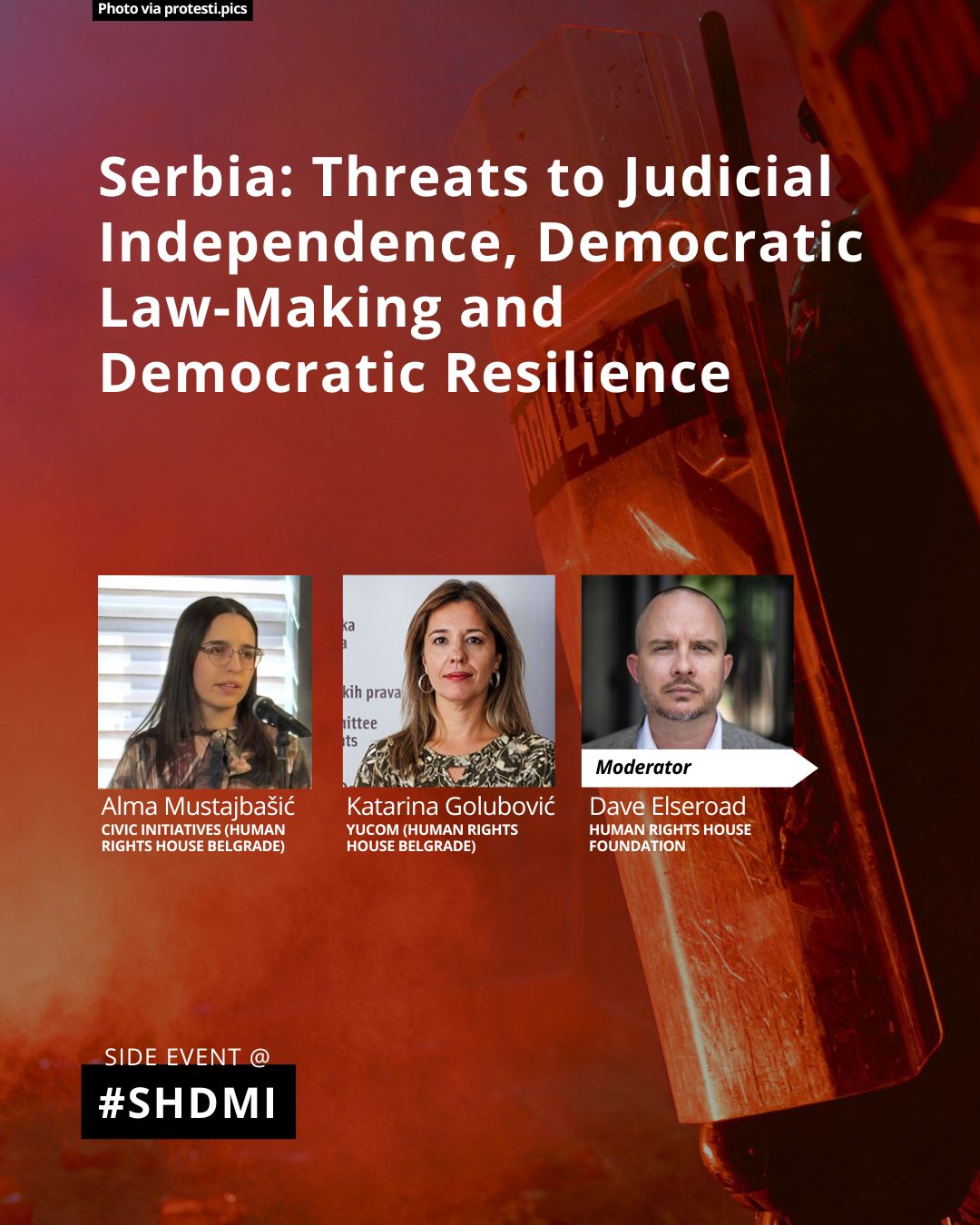
As part of the first OSCE Supplementary Human Dimension Meeting (SHDMI), a side event titled “Serbia: Threats to Judicial Independence, Democratic Law-Making and Democratic Resilience” was held on 17 March in Vienna, where representatives of civil society and international organisations pointed to serious challenges in the field of the rule of law in Serbia.
The panel featured Alma Mustajbašić from Civic Initiatives and Katarina Golubović from YUCOM (Lawyers’ Committee for Human Rights), while the discussion was moderated by Dave Elseroad from the Human Rights House Foundation.
The discussion focused on the consequences of recent legislative changes and their impact on judicial independence, democratic law-making processes, and the overall resilience of institutions. Participants assessed that the amendments to five key judicial laws, adopted at the end of January 2026, represent part of a broader pattern of systemic pressure on the judiciary and prosecution, particularly in the context of proceedings against high-ranking state officials in the “Canopy” and “Generalštab” cases.
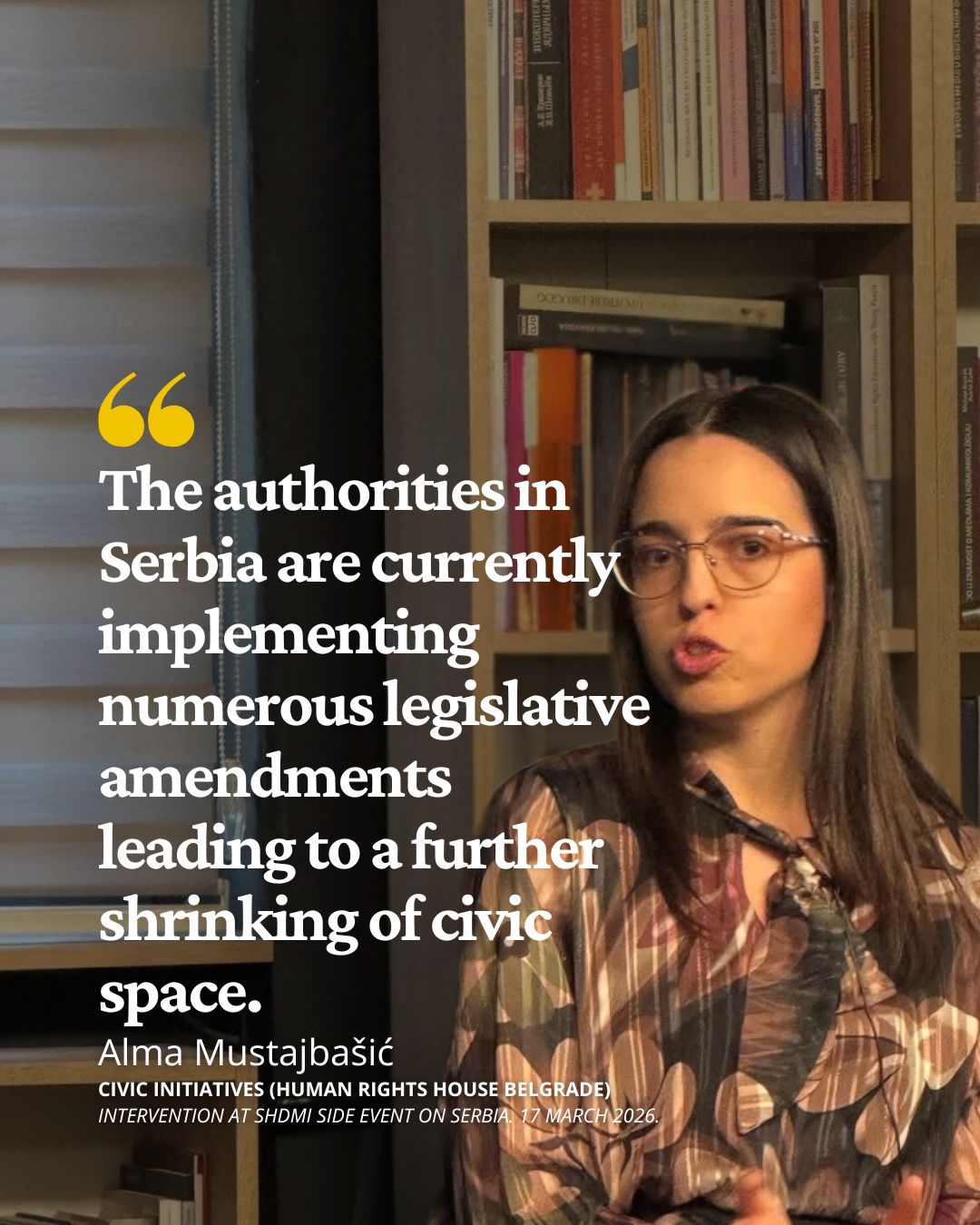
Speaking about the broader context of legislative changes, Alma Mustajbašić highlighted that numerous amendments are currently being implemented in Serbia, further restricting the space for civil society and indicating a continued trend of shrinking civic space.
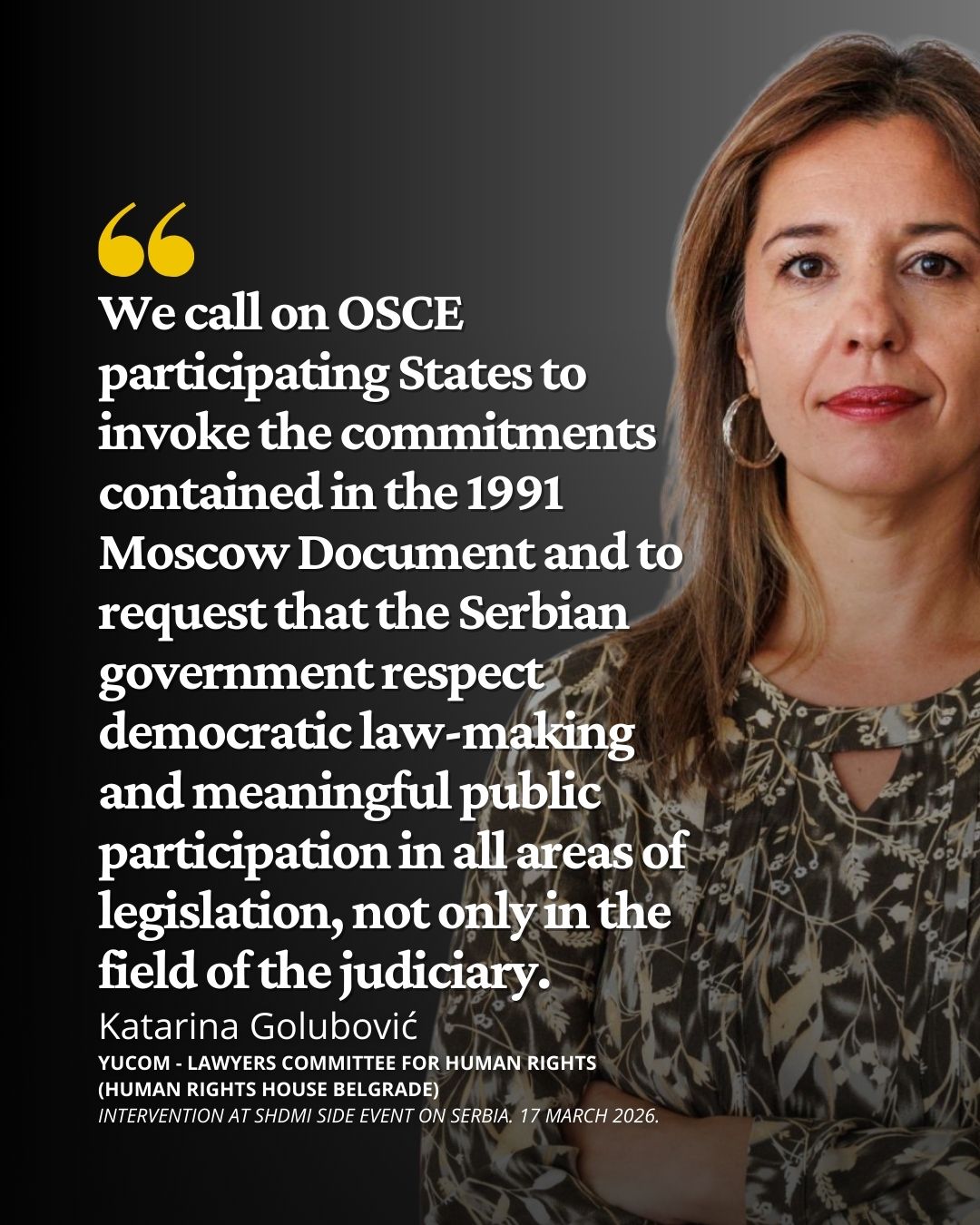
Particular attention was given to the manner in which laws are being adopted. Non-transparent and non-inclusive procedures are increasingly becoming the norm, with public interest and the participation of relevant social actors being sidelined in favour of political and financial priorities. Katarina Golubović emphasised the importance of respecting international commitments: “We call on OSCE participating States to invoke the commitments contained in the 1991 Moscow Document, and to request that the Serbian government respect democratic law-making and meaningful public participation in all areas of legislation, not only in the field of the judiciary.”
Participants also warned about the broader consequences of these processes, including the weakening of the state’s capacity to combat organised crime and corruption, as well as further erosion of public trust in institutions. It was further highlighted that pressures on civil society organisations, activists, and citizens are intensifying through various forms of repression, including police violence, raids, arrests, and illegal surveillance, contributing to a chilling effect and undermining the democratic resilience of society.
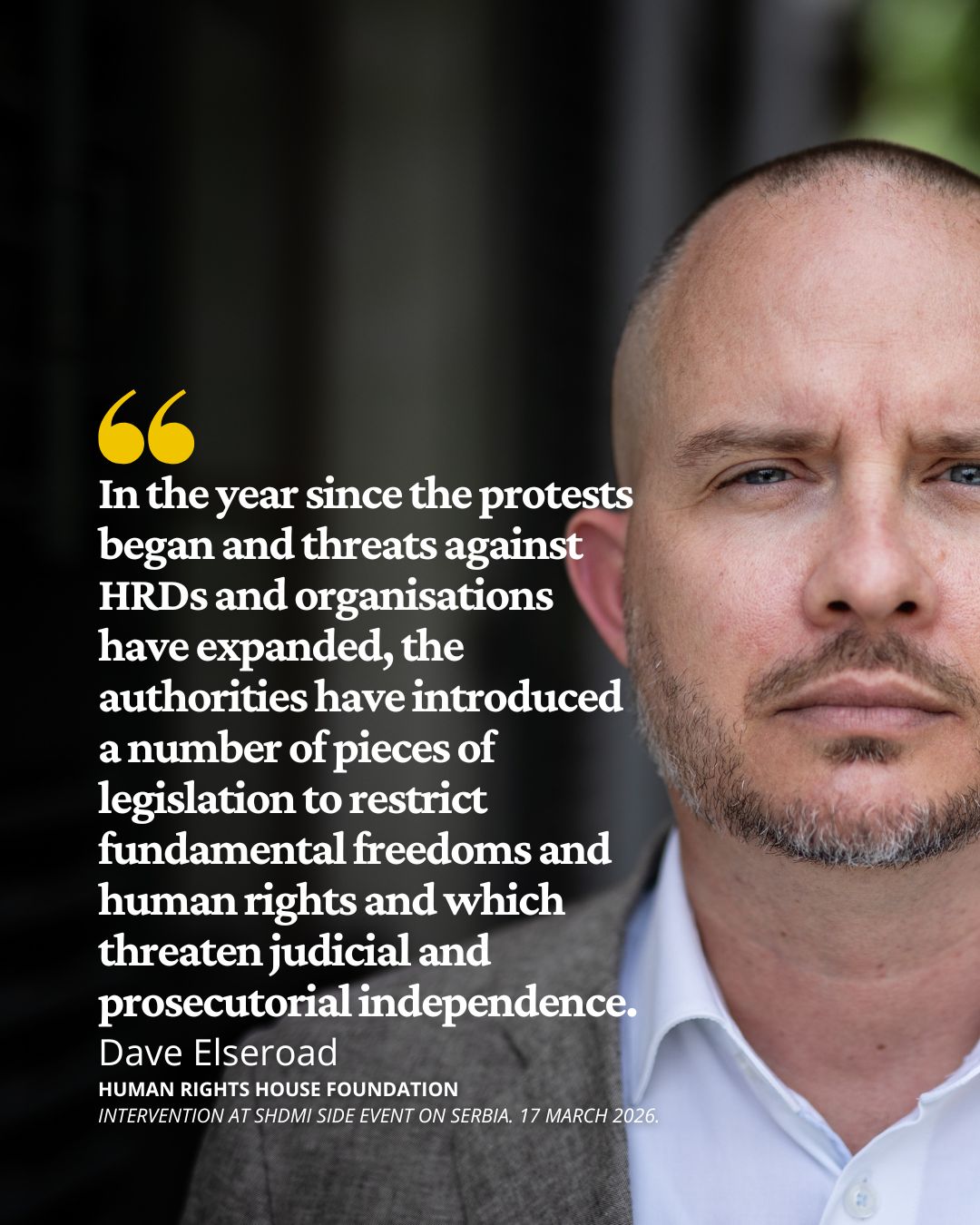
Moderator Dave Elseroad underlined: “In the year since the protests began and threats against HRDs and organisations have expanded, the authorities have introduced a number of pieces of legislation to restrict fundamental freedoms and human rights and which threaten judicial and prosecutorial independence.”
The discussion also raised the question of the role of the OSCE and participating States in safeguarding democratic standards, the rule of law, and the integrity of international judicial cooperation, calling for stronger international engagement.
The event was organised within the framework of the first SHDMI meeting in Vienna, which serves as a platform for the exchange of views among OSCE participating States, OSCE institutions, international organisations, and civil society on the implementation of commitments in the human dimension. The first meeting in 2026 focused on threats to democratic law-making, the role of preventive safeguards, the contribution of civil society and independent oversight, as well as the importance of judicial review and accountability throughout the legislative process.
SPACE FOR YOU
